
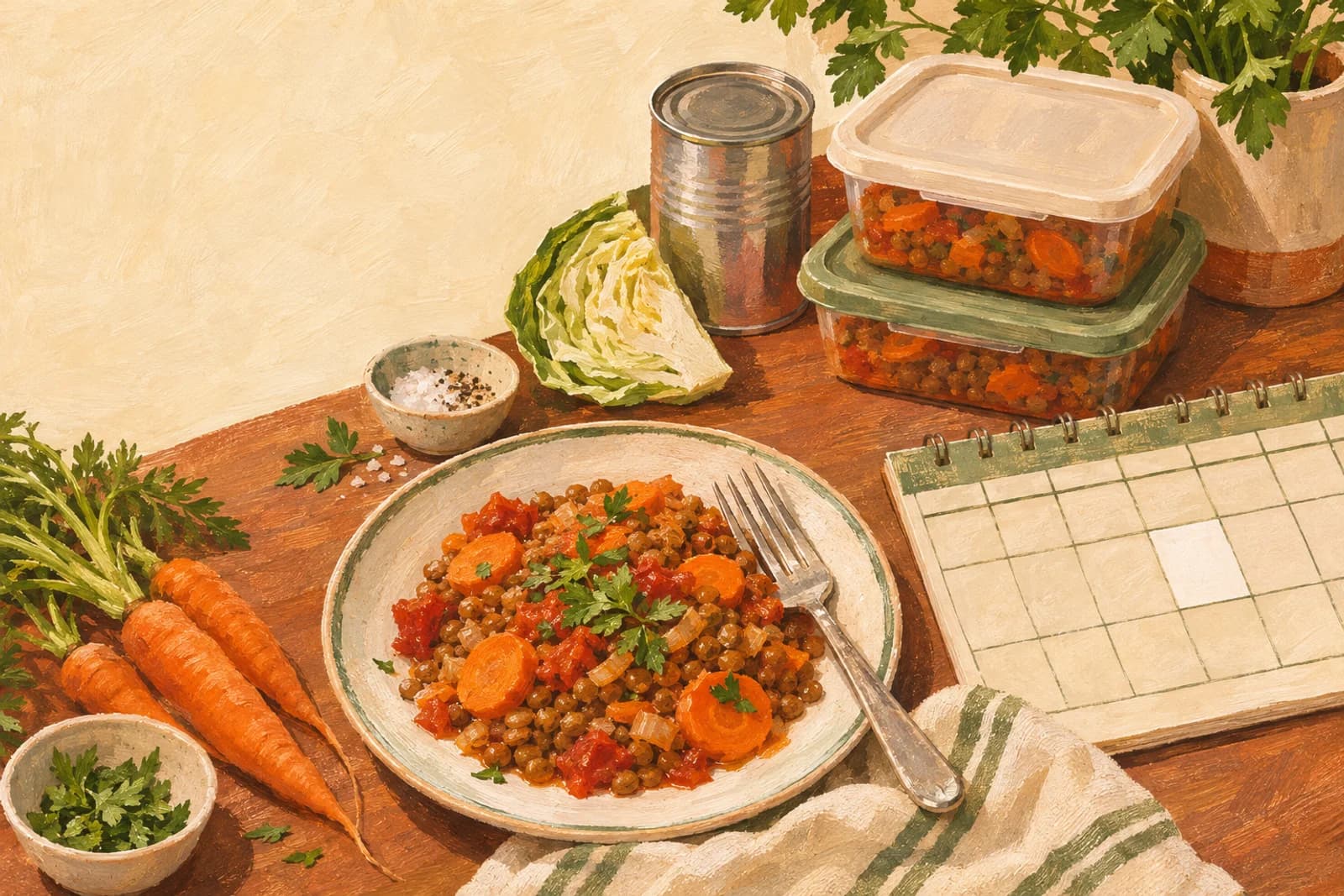
1. Count meals before you count containers
It’s Sunday in a hypothetical two-person household. Both people will be home for dinner, and both need lunch on Tuesday. Friday dinner together looks likely, but one person’s shift may change. Wednesday is anyone’s guess. A plan that puts a fresh dinner on every blank square would send them shopping for meals they may never eat. Instead, they start with two questions: Who needs feeding, and what food, if any, is already doing that job? Sunday dinner and Tuesday lunch call for four portions between them. Friday may call for two more. Wednesday doesn’t yet call for a batch of anything.
Give each meal slot one of three statuses: committed, uncertain, or already covered. Committed means someone is counting on food from the household kitchen: two people on Sunday, two packed lunches on Tuesday. Uncertain means that the number of diners, or whether anyone will eat at home, is still up in the air. Friday and Wednesday both land here, even though Friday is much more likely. Already covered means you can name the food or arrangement and say whom it feeds. If there are two frozen servings of soup for Monday dinner, Monday doesn’t need a new dinner recipe or another set of ingredients.
Count portions within a slot rather than giving everyone the same status by default. If one person finds out they have a Wednesday work dinner and the other will be home, that’s one dinner to cover, not two. Likewise, one leftover serving does not make dinner for a pair already covered. Write down the remaining need: one serving from the kitchen. In a shared plan, a name beside a meal is often more useful than a check mark. It tells the shopper whether the check means one person has made arrangements or nobody needs anything.
The U.S. Environmental Protection Agency recommends checking what’s at home before shopping and making a list with quantities based on the meals you expect to eat there. The distinction between Friday and Wednesday puts that advice to work. Buying fresh ingredients for an extra Wednesday dinner puts another meal on the clock, even if nobody comes home to eat it. Keeping an unopened pantry meal in reserve can cover that same possibility without requiring dinner to happen on Wednesday. The backup still has to be something people will eat and substantial enough to serve as dinner. The difference is that it can wait.
For this household, one Sunday pot of brown or green lentils supplies six portions. Two go straight to the table with browned carrots. Two go into the refrigerator for Tuesday’s pitas. The last two go promptly into the freezer for Friday’s tomato-lentil soup. Six is an editorial example of how to divide this batch, not an agency recommendation about serving size. Another household might divide the same pot differently. What matters for planning is that each portion has one destination: the two lunches aren’t also available for a Wednesday dinner unless the household explicitly changes the plan.
The split also keeps the calendar from making a food-safety decision by default. Federal leftovers guidance gives properly handled refrigerated leftovers three to four days and recommends storing them promptly in covered, shallow containers. Tuesday is an intentional refrigerator meal; Friday is not a reasonable destination for lentils left in the refrigerator since Sunday. Freezing the Friday portions on Sunday makes them available for the likely dinner without betting on the schedule. If Friday is canceled, the portions can stay frozen for another planned meal. Nobody needs to eat them just because they were written next to Friday.
Tuesday’s entry needs one more detail: where lunch will be eaten. A pita for someone working at home and one for someone spending the day away may start with the same filling, but they don’t necessarily have the same travel plan. University of Minnesota Extension guidance recommends keeping perishable packed lunches at 40°F or below, using an insulated bag with at least two cold sources, and refrigerating them on arrival when possible. If one person can’t keep a lunch cold, don’t count a lentil pita as that person’s packed meal. They can arrange another lunch and give the refrigerated portion a different destination within its storage window.
Write the week in terms that survive a change of plans: “Sunday dinner, two at home, lentils and carrots. Monday dinner, two, covered by freezer soup. Tuesday lunch, two, lentil pitas if both can keep them cold. Wednesday dinner, number unknown, pantry backup. Friday dinner, likely two, lentils frozen on Sunday.” Leave the other slots alone unless someone actually needs food for them. If Wednesday becomes a dinner for one, the household can decide whether to open the backup or use another meal that’s already available. It doesn’t have to fill every open slot before it can write a useful shopping list.
Sources for this section: Preventing Wasted Food At Home; Thanksgiving Leftovers for Safe Keeping, Weekend Grazing; Talking food safety with University of Minnesota.
2. Take a three-zone inventory you’ll actually use
Take the meal plan to the refrigerator, freezer, and cupboard before adding anything to the shopping list. At each stop, ask the same three questions: What is it? How much is left? What meal would use it? Add a preparation or opening date where it matters and is known. The EPA recommends checking all three places before shopping and planning around food that needs to be used. This is a short working list, not a household catalog. A jar of cumin can stay off it unless someone needs to know whether there’s enough to cook the lentils.
In the refrigerator, the useful entry is “half a cabbage, cut Saturday, enough to shred for two Tuesday pitas.” That does more work than “vegetables”: it says what the cabbage is for and prevents the shopper from buying another head or a bag of slaw. The cut date is part of the household’s record, not a claim that cabbage has a particular storage window. If the half turns out to be larger than the pitas need, write a second job for the extra, such as sliced cabbage alongside Monday’s soup. Don’t allocate all of it to both meals.
In the freezer, write “two single servings of soup, cooked and frozen last Thursday, both reserved for Monday dinner” and “one opened bag of frozen peas, enough for Friday soup and at least another side.” The soup label supplies its history; the pea entry only needs enough detail to answer whether to buy more. There’s no need to weigh the bag if the recipe takes a handful and there’s plainly more than that. If the two soup containers are on different shelves, put them together or make a note of where each one is. Otherwise, someone may see one and change the shopping list unnecessarily.
In the cupboard, the entry might be “one sealed 14- to 15-ounce can of diced tomatoes, reserved for Friday soup.” Nearby is an opened loaf with four slices the household can use for toast. These are different planning units: the tomato can is claimed by a recipe that uses all of it; the bread can be allocated by the slice. Check the cupboard for white beans at the same time. If there are none, write “white beans: zero” on the list. That small entry saves the second shopper from reading “tomatoes and bread on hand” as “Wednesday dinner covered.”
Now choose just three use-first items for the front of the list. In this kitchen they’re the cabbage, the opened loaf, and the two servings of soup. The cabbage has two near-term jobs. The bread can be set aside for the fallback and frozen if it’s unlikely to be eaten in time, as the EPA advises for foods that would otherwise go unused. The soup gets the Monday slot so it doesn’t stay buried. Putting it on the list is a scheduling choice, not a claim that it’s about to become unsafe in the freezer. The sealed tomatoes and the peas have assignments, but they don’t need to take up space on this short list.
Use a shared note or a scrap of paper on the refrigerator to hand off the plan. For instance, name both Monday diners beside the two soup servings. If one person takes a container for lunch, they cross out one serving and edit Monday to show that only one dinner is covered. The other person can then fill one gap rather than buy two dinners or arrive home expecting two bowls. The same goes for an ingredient: text “used the Friday tomatoes” or change the note when the can comes off the shelf. Updating the reservation at the moment of use is more reliable than hoping to remember at the store.
A dated, identified container belongs on the inventory only if there’s enough known about its handling to plan around it. An undated tub of something that might be soup doesn’t count as a meal. Ask the person who packed it whether they know what it is, when it was cooked, and how it was stored. If the history can’t be established, leave it out of the count rather than filling in a plausible date. The University of Minnesota Extension guidance is clear that smell, appearance, and a taste test can’t certify the safety of leftovers. A label helps preserve information; it can’t supply information nobody recorded.
Take the inventory shopping in the units the kitchen will actually use: cabbage for two pitas, peas for Friday, two bowls of Monday soup, one can of tomatoes already spoken for, and bread for toast. Don’t write “vegetables, soup, canned goods” and expect a different shopper to infer those quantities or reservations. The FDA recommends using or freezing foods before they have to be discarded. A useful inventory makes that decision specific: someone is responsible for the bread, the cabbage has a place in the next two meals that can use it, and the freezer soup has both diners’ names on it.
Sources for this section: Preventing Wasted Food At Home; How to Cut Food Waste and Maintain Food Safety; Talking food safety with University of Minnesota.
3. Shop for gaps, and build one dinner that can wait
The shopping list starts with what the household can cross off. There’s cabbage for the pitas, peas and a can of tomatoes for Friday, and bread for the backup. Monday’s soup is already made. The lentil recipe still needs 1½ cups of dry brown or green lentils, six medium carrots, one onion, and a lemon. Tuesday needs two pitas and two tablespoons of plain yogurt, plus a squeeze of lemon. Buy the smallest plain yogurt container that fits the recipe unless someone has a specific use for the rest. Check for olive oil, cumin, salt, and pepper rather than buying duplicates.
The pantry backup needs a commercially canned white bean and a commercially canned tomato, with the bread already at home. Write that as one can of white beans and one additional can of diced tomatoes. The word “additional” earns its place: there was a can on the inventory, but the Friday soup already claims it. If the household doesn’t mind making Friday’s soup another week, it can skip the second tomato can and decide later which dinner gets the first. If it wants the option of serving both meals, the second can covers a real gap, even though Wednesday itself is uncertain.
Compare that extra can of beans with a bag of greens you might buy for a lunch you haven’t decided to eat. The beans have a recipe, a quantity, and a waiting place. The greens have only a possibility. That doesn’t make greens a bad buy: if both people want salad and know which meal it goes with, buy what they expect to use. But for this week’s two lunches, the cabbage already supplies the crunch. The EPA recommends writing quantities on the shopping list and buying for the meals actually expected at home. Here, that means two pitas, not two pitas plus a speculative bag of salad.
Compare package sizes by what you can assign, not just the unit price. A six-pack of pitas gives you exactly two Tuesday lunches and four more pitas to account for. A smaller pack can be the better fit even at a higher price per pita. If the bigger pack is the only option, decide before buying it whether the extras have another meal or can go in the freezer, following package directions. Dry lentils present a different tradeoff: a larger package can make sense if the rest meets the package’s storage instructions and the household already cooks with lentils. A low price per ounce isn’t much help if you don’t use the ounces.
Make the fallback a recipe you could cook without another trip. For two people, toast four slices of bread. Drain a can of white beans, then warm the beans and a 14- to 15-ounce can of diced tomatoes in a skillet with a little olive oil and a pinch of cumin. Mash some of the beans with the back of a spoon and simmer until the mixture will sit on toast rather than run off it. Taste for seasoning and spoon it over the slices. With just two slices left, give each diner one and serve the extra beans and tomatoes alongside. No garnish or fresh side is required to make the meal work.
If everyone eats elsewhere on Wednesday, both cans reserved for the fallback stay unopened, and bread set aside in the freezer stays there. Friday can still go ahead with its own tomato can. If Wednesday dinner is for just one person, there’s a different choice: use an already portioned meal if one is available, or open the cans and plan for the second serving. Once the cans are open, the unused food isn’t shelf-stable pantry stock. Follow package handling directions and refrigerate unused contents or the cooked mixture promptly in a covered container rather than putting it back in the cupboard.
Choose the fallback products by their package storage directions, not by which aisle you found them in or whether they came in a can or carton. If a product says to keep it refrigerated, it doesn’t belong in the cupboard plan. FDA storage guidance flags swelling, leakage, and severe damage as warning signs for cans. Leave a visibly compromised can at the store; if you find one at home, don’t open it to see whether the contents look acceptable. The backup only works if its ingredients are usable. Checking the cans when you make the shopping list is easier than discovering a leaking one when dinner has already fallen through.
One person can shop from a list that says “lentil batch: 1½ cups dry lentils, six carrots, one onion, one lemon; Tuesday: two pitas, plain yogurt; reserve: one can white beans, one can diced tomatoes.” Put “already have” beside the cabbage, peas, Friday tomatoes, and bread, especially if two people might shop on separate trips. At the cupboard, keep the backup beans beside their tomatoes so neither is mistaken for an unclaimed ingredient. The reserve is one named dinner, not a reason to fill a shelf: when the cans get used, put them back on the next list only if the household still wants that dinner on call.
Sources for this section: Preventing Wasted Food At Home; Are You Storing Food Safely?; How to Cut Food Waste and Maintain Food Safety.
4. A factory date and a prep date answer different questions
Set three things on the kitchen counter while you make the plan: a sealed can of tomatoes marked “Best if Used By,” a tub of yogurt marked “Keep Refrigerated,” and the lid you’ll put on the Sunday lentils. One date describes the quality the maker expects. One instruction tells you where a product belongs. The date you’ll write on the lid tells the household when it cooked the food. None of the three does the work of the others. In particular, a date printed neatly on a package can’t tell you whether that package spent the afternoon somewhere it shouldn’t have.
Start with the tomatoes. FDA and USDA guidance describes “Best if Used By” as an indication of expected quality, not as a safety cutoff. If that date has passed on the sealed can, the wording alone doesn’t tell you to throw it out. Nor does a date still in the future establish that the can is usable regardless of its condition or storage. Read the actual words next to the date rather than treating every date stamp as interchangeable. USDA also identifies infant formula as an exception to its general date-label guidance. The advice about a quality date on tomatoes isn’t a rule for formula or an interpretation of every label you’ll encounter.
The yogurt poses a different question. “Keep Refrigerated” is a handling instruction, not a prediction about when the yogurt will taste best. Suppose one shopper sees a date well into next month and puts the tub beside the unopened tomatoes while unloading groceries. The future date doesn’t make the counter or the cupboard suitable storage. Follow the refrigeration instruction and any package directions that apply after opening. If your household writes the opening date on the lid, that note can help you use those directions. It doesn’t start a new clock that cancels the time or conditions before you opened it.
The lentils need a date for a reason the grocery label on the dry bag can’t address. Once the lentils are cooked, anyone opening the refrigerator needs to know when that happened. Write the actual cook date, including the month and day, rather than just “Sunday,” which becomes ambiguous the next time Sunday rolls around. If you move the lentils to another container, carry the cook date over. The date you repack them or stir in a spoonful of dressing is not the date you cooked them. If a label also says “Tuesday lunch,” read that as a reservation, not a statement about how long the food keeps.
For a storage decision, match the food and its preparation state to the federal Cold Food Storage Chart. At 40°F or below, raw chicken pieces have a refrigerator window of one to two days, hard-cooked eggs have one week, and prepared soups and stews have three to four days. Those aren’t three estimates for the same kind of container. They are entries for different foods. A household that puts all three away on Sunday can’t give them the same use-first date. If a midweek dinner is canceled, the eggs’ longer window tells you nothing about how much time you have to change plans for the raw chicken.
The distinction matters at the store as much as at the refrigerator. Say you’re deciding whether to buy raw chicken pieces on Sunday for a dinner that might not happen until Wednesday. A package date that looks comfortably far away isn’t a reason to count on keeping the chicken raw in the refrigerator until then. The chart’s one-to-two-day entry is the relevant refrigerator guidance for those pieces. You could shop closer to the meal or plan to freeze the chicken promptly instead. By contrast, the household can leave its unopened shelf-stable tomatoes in reserve according to the package directions; a change in the dinner calendar doesn’t turn them into a refrigerated leftover.
A readable date is useful only if the handling behind it is known. Imagine one person finds lentils plainly marked with Sunday’s date, but the other remembers leaving that container out and can’t say when it went into the refrigerator. Looking up the storage window won’t establish what happened before refrigeration. University of Minnesota Extension guidance cautions against using smell, appearance or a taste test to decide whether leftovers are safe. If you can’t establish that the portion was handled safely, don’t serve it. An ordinary smell is no substitute for the missing history, just as a fresh label is no substitute for the original cook date.
Put the detail that governs the next decision where someone will see it. Leave the maker’s handling instructions readable on the yogurt. Put the cook date on the container of lentils rather than relying on a note that might get erased when Tuesday’s plan changes. If a shared list includes raw chicken or hard-cooked eggs, name the food in its current state instead of recording everything as “prepped Sunday.” The record should let the next person find the right chart entry or follow the right package instruction without having to guess what the first cook meant.
Sources for this section: Is This Still Good to Eat? Three Things You Need to Know About Food Date Labeling; How to Cut Food Waste and Maintain Food Safety; Cold Food Storage Chart; Talking food safety with University of Minnesota.
5. Pick components that will taste like different meals
The six portions of lentils need to do three different jobs: sit alongside browned carrots, hold together inside a pita and give a tomato soup enough substance to serve as dinner. Season the whole pot lightly with softened onion and cumin, then stop short of making it taste like any one of those meals. The onion and cumin give a cold bite of lentils some flavor of its own, but they won’t dictate how much lemon goes on the warm plate or how the tomato broth should taste. Seasoning the base lightly isn’t the same as planning to eat it plain.
Give each meal three roles to fill: a substantial base, a vegetable that brings texture and a finish you add just before eating. The point is to change what a bite feels and tastes like, not merely to move the same mixture from a plate to a bowl. On Sunday, the browned edges of the carrots contrast with the tender lentils. On Tuesday, fresh shreds of cabbage supply a crisp bite without needing another cooked side. On Friday, the lentils thicken the tomato broth as you stir, while the peas give you something distinct to bite into. Here’s how those choices line up:
Warm plate | Base: a mound of lentils. Texture: browned carrot pieces, left large enough to pick up with a fork. Finish: a squeeze of lemon on the served portion. Put the carrots beside the lentils rather than folding them into the storage batch. That keeps their browned surfaces distinct on the plate and leaves the other four portions free of a vegetable you didn’t assign to either later meal.
Cold pita | Base: drained lentils that won’t flood the pocket. Texture: finely shredded cabbage. Finish: a little plain yogurt sharpened with lemon, tossed with the cabbage rather than poured over the lentils. Keep the piece of cabbage reserved for Tuesday intact until you need to shred it. Shredding only what you need gives you fresh cut edges for the slaw and leaves any extra piece available for a different meal instead of committing it all to the yogurt dressing.
Brothy soup | Base: the same lightly seasoned lentils, loosened in tomatoes and liquid. Texture: peas rather than the cabbage slaw. Finish: taste the broth before deciding whether it needs salt, pepper or any more acid. Canned tomatoes bring their own tang, so the squeeze of lemon that helps Sunday’s carrots might be unnecessary here. The soup is also the meal in which a portion that breaks up readily is an advantage: some lentils can blend into the broth without making the whole bowl feel uniform.
The matrix is a way to make substitutions without assuming everything in the vegetable drawer does the same work. If the two diners use their pitas earlier in the week, serve the lentils and cabbage in bowls. You lose the bread, not the contrast between the soft lentils and crisp cabbage. If you put the browned carrots in those bowls instead, you get a sweeter, softer lunch. That may be exactly what someone wants, but it won’t stand in for the crunch. Conversely, the yogurt-dressed cabbage makes sense in a pita because the bread can hold a modest amount of dressing. Stirring that slaw into the tomato pot would change both the broth and the cabbage, not just save a bowl.
There’s a cost to storing every component separately. For two known Tuesday lunches, separate tubs for lentils, cabbage and dressing can mean extra lids to match, more refrigerator space and more washing for a meal that might take only a minute to assemble. One container per person with the lentils and dressed cabbage already together is easier to grab. The tradeoff is that the cabbage will mingle with the lentils, and a pita filled well ahead of lunch can absorb the dressing. Packing the bread separately and using one small cup for the slaw buys you most of the texture benefit without turning lunch into a stack of containers.
Let the certainty of the meal decide how far to assemble it. If both people will eat Tuesday’s pitas, dress just enough cabbage for two and agree whether they’ll fill the pockets at home or at lunch. If one person doesn’t know whether they’ll want a pita or a bowl, leave that person’s lentils plain and let them take the finish they want. This is where planning around food already on hand, as the EPA recommends, becomes a culinary decision: you don’t need to buy three sets of ingredients to make three distinct meals. You do need to stop combining them at the point where the next meal would benefit from a different texture or seasoning.
Sources for this section: Preventing Wasted Food At Home; Thanksgiving Leftovers for Safe Keeping, Weekend Grazing.
6. Plan the cook around the sink, the counter, and the fridge
Before the lentils go on the stove, make room for the food that will come off it. Clear a refrigerator space for the two Tuesday portions and a freezer space for the two Friday portions. Set out clean, shallow containers and their lids, a clean spoon for portioning and the plates for Sunday dinner. Give ready-to-eat ingredients a spot away from the sink and any area you’ll use for raw meat. In a kitchen with one short counter, that might mean putting the clean plates on the table rather than lining them up next to the cutting board. You want to be able to put food away without first unloading a rack or washing a pot.
For the lentil-and-vegetable session, start the lentils, then prep the carrots, onion and lemon while the pot is occupied. Keep the Tuesday section of cabbage intact and put it back in the refrigerator rather than leaving it out with ingredients for Sunday dinner. If you’re cutting any cabbage to eat tonight, do that on a clean board and move it to a clean bowl. Wash tools and work surfaces between foods, as the FDA advises. Use the space you clear to set down the finished carrots or to portion the lentils, not to start another chopping job while the hot food waits for a place to go.
When the vegetables are done and the onion and cumin are folded through the lentils, bring the clean plates and storage containers to the pot. Serve the two dinner portions, then use the clean spoon to divide the portions for later and get them into cold storage promptly. The CDC notes that small portions of hot or warm food can go straight into the refrigerator in clean, shallow containers. The practical payoff of setting out the containers early is that you don’t have to leave the full pot on the stove while you hunt for a lid, clear a shelf or ask who’s saving what.
If Sunday dinner will also include chicken, change the order of the counter work. Finish cutting the cabbage and lemon before you take out the raw poultry, and move the vegetables and their clean utensils out of that work area. In a one-board kitchen, that keeps you from needing to interrupt raw preparation to shred cabbage for someone at the table. Keep the chicken and its juices away from ready-to-eat food, as the CDC advises. Prep order reduces the number of times you need the same spot for different jobs; it does not make a board or a knife clean after raw chicken touches it.
Once the chicken is in its cooking pan, wash your hands with soap for at least 20 seconds, following CDC guidance. Wash the board, knife and work surface before they’re used for anything else, following FDA guidance. Think about what you’re about to touch: the spoon for the lentils, the refrigerator handle and the lids all belong on the clean side of the workflow. If one person handles the chicken while another finishes the vegetables, keep those jobs separate until the raw work is done and the area is washed. Handing someone the raw chicken tongs to move a carrot undoes the point of giving the cooks separate tasks.
Keep two thermometer jobs straight. The appliance thermometer tells you the temperature inside the refrigerator; it cannot tell you whether the center of a piece of chicken is cooked. A food thermometer measures the chicken’s internal temperature. Poultry needs to reach 165°F internally, according to the federal safe minimum internal temperature chart. If one piece is thicker than the rest, don’t take a reading in a smaller piece and assume it applies to the bigger one. Browning is useful as a cooking cue for flavor and appearance, but the color on the outside doesn’t verify the temperature inside, and neither does the oven setting.
Put the cooked chicken on a clean serving plate and use clean utensils to move it. The FDA specifically advises against putting cooked food back on an unwashed plate that held raw meat or poultry. If you have only one suitable platter, wash it before you need it again; better yet, plate directly onto the clean dinner plates you laid out at the start. Keep the portioning spoon with the lentils rather than using it to serve the chicken. That lets one person put away the Tuesday and Friday portions while the other finishes plating, without either cook borrowing tools from the other side of the counter.
If the small kitchen can’t accommodate both jobs without crowding, finish and store the lentils before setting up for the raw chicken, then cook the poultry for the meal you’re about to eat. You give up some overlap at the stove, but you gain a clean work surface and an unobstructed route to the refrigerator. On a night with enough room to cook both in parallel, the test is the same: when the pans are ready, there’s a clean plate for dinner, clean utensils for serving and a clear place to put the shallow containers. If getting to any of those requires moving raw packaging or washing up first, change the order before you start.
Sources for this section: Preventing Food Poisoning; Safe Food Handling; Cook to a Safe Minimum Internal Temperature.
7. Cool the portions, not the stockpot
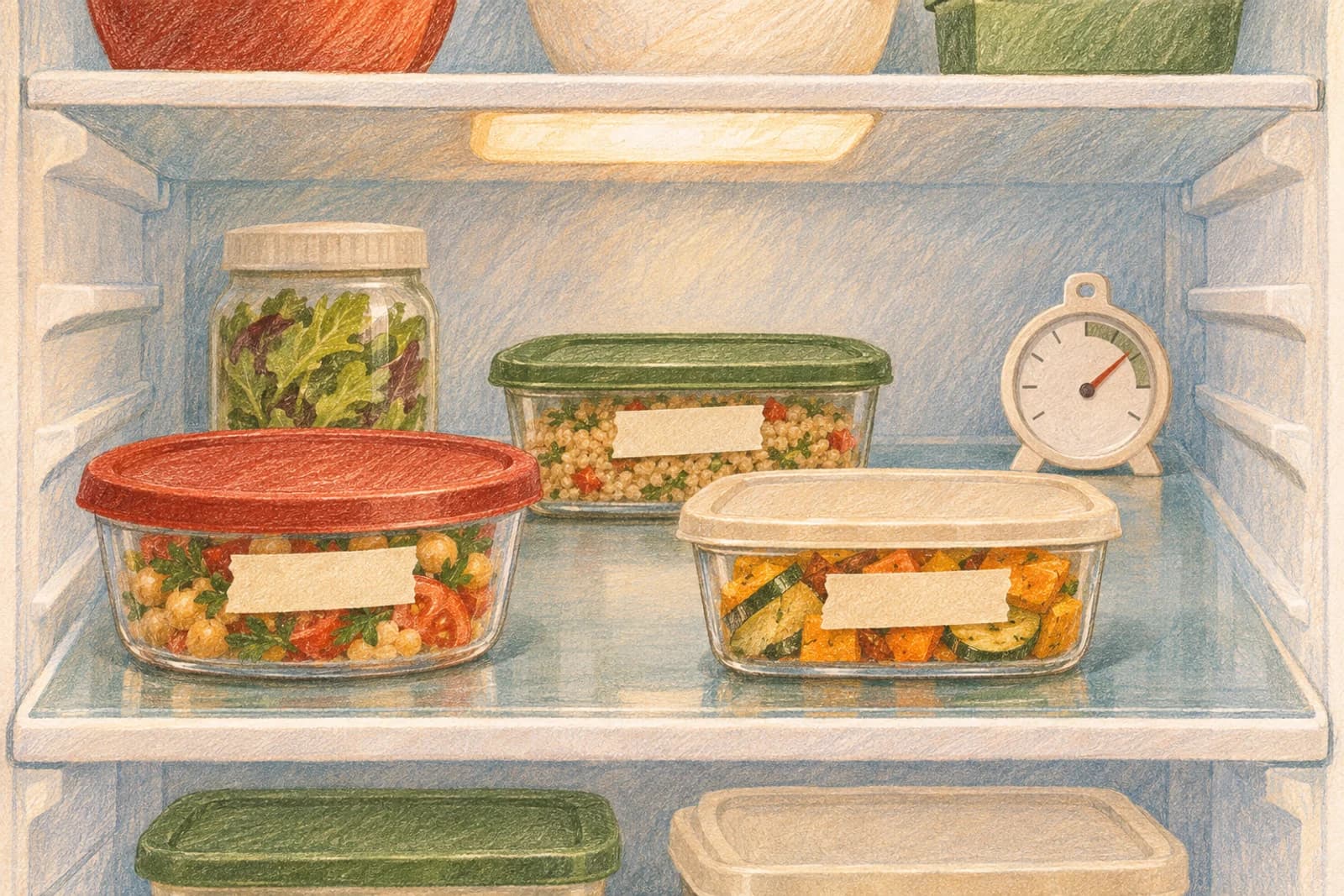
When the Sunday lentils are ready, take the pot off the burner and bring the plates and storage containers to it. Two portions go onto plates with the browned carrots. The other four have jobs too: two for Tuesday’s pitas and two for Friday’s soup. Set out clean, shallow containers and matching lids before the lentils finish cooking, including containers suitable for the freezer. That way, the food for later doesn’t have to wait in the pot until dinner is over. If two people are cooking, one can take the plates to the table while the other puts away the reserved portions.
Use a clean spoon to divide the lentils, and pay attention to how deep they sit in each container. A tall tub that holds all four reserved servings may take up less shelf space, but it puts more of the food far from the container’s surfaces. The federal leftovers guidance calls for prompt storage in covered, shallow containers. A broad container can work for a pair of servings if the lentils spread out rather than pile up. If the only broad container is already in use, two shallow single-serving containers are a better fit than a deep tub chosen simply because its lid is handy.
There’s no need to leave the lentils out until they reach room temperature. The CDC says small portions of hot or warm food can go promptly into the refrigerator in clean, shallow containers. Cover the Tuesday portions and put them in the refrigerator; cover the Friday portions in freezer-suitable containers and put them in the freezer as part of the same handoff. Don’t make the Tuesday portions wait while someone decides whether Friday is still on. Even if the dinner plan changes before the plates are cleared, those frozen portions can take a different meal slot.
The CDC’s household rule is to refrigerate perishables within two hours, or within one hour when they’re exposed to temperatures above 90°F. Those are outer limits, not suggested counter rests. Suppose Sunday dinner is moving outside on a hot evening. The portions reserved for Tuesday and Friday don’t need to go out with the serving plates. Put them away in the kitchen before carrying dinner to the table. If you do take perishable food outside and it’s exposed to temperatures above 90°F, the shorter limit applies. Bringing the dishes back inside doesn’t undo the time they already spent out.
Getting food into cold storage on time and knowing how quickly its center cools are different questions. A clock can tell you when you put the food away. It cannot tell you what’s happening in the middle of a stockpot. The sides may feel cooler while the center is still warm, and the CDC’s two-hour guidance doesn’t certify the cooling of a large mass of food. The shallow-container advice addresses that practical problem: dividing the batch means you aren’t asking the refrigerator to cool all the lentils as one deep mass. A lid and a dated label are useful, but neither changes the depth of the food beneath them.
In a shared kitchen, make the handoff explicit. If one person dishes up dinner and the other says, “I’ll take care of the lentils,” specify whether that includes both the refrigerator and freezer portions. Otherwise, two containers can sit beside the stove while each person thinks the other is about to move them. Do the storage job before sitting down, and tell the other cook where the portions went. If someone wants seconds, they can ask rather than silently taking a Tuesday serving. This is especially useful when the two cold-storage destinations are in different parts of the kitchen.
Check that the containers will fit without crowding before committing to the six-portion batch. The FDA advises leaving room for cold air to circulate in the refrigerator. A shelf that fits the Tuesday containers only if you wedge them tightly behind other dishes is a reason to change the prep plan. If the freezer is already full, don’t solve that by keeping the Friday portions in the refrigerator until you make space. Cook four portions instead of six and use the pantry dinner on Friday. If even two shallow containers won’t fit in the refrigerator, cook for Sunday dinner alone and make a different Tuesday lunch plan.
The same space check helps when another dish is coming off the stove at the same time. If Sunday includes a second cooked dish whose leftovers will need cooling, count its containers before deciding how much to make. You might roast only the carrots you’ll serve or skip the extra side if it would leave you with more food than you can put away promptly. Make that adjustment while the ingredients are still uncombined, not after dinner when the only open space is on the counter. The amount you can cook in one pot and the amount you can put away promptly may not be the same.
Sources for this section: Preventing Food Poisoning; Thanksgiving Leftovers for Safe Keeping, Weekend Grazing; How to Cut Food Waste and Maintain Food Safety.
8. Set up a fridge where Tuesday’s lunch won’t disappear
Give the Tuesday lentils a place you can reach without unloading the refrigerator. In a hypothetical two-person kitchen, that could be the front of a middle shelf, with the cabbage nearby and the raw poultry, if there is any, on a lower shelf in a leakproof container. Turn the lentil labels toward the door so a person looking for lunch can read them without lifting the tubs. The best spot isn’t necessarily a whole shelf dedicated to meal prep. It’s a defined space where two covered servings are visible and where nothing raw can drip onto them.
The CDC advises keeping raw poultry and its juices away from ready-to-eat foods. The lower shelf is useful because a leak there is less likely to reach the food above it, but placement alone isn’t containment. Put the poultry package inside a leakproof container rather than relying on the store wrapping or setting it directly beside the cabbage. If the only room for a large package is next to the lunches, move the ready-to-eat food to another visible spot or rearrange the shelf before putting the poultry away. Don’t trade separation for the convenience of keeping all the week’s ingredients together.
Visibility can also come from a short note rather than a physical front row. If the refrigerator is narrow, write something like “Tuesday: two lentil lunches, middle shelf behind yogurt; cabbage in drawer.” Keep the note on the door or in a household list both diners check. The note should point to the food, not become a second inventory that has to be reconciled every evening. When one person takes a serving, change the count. If the cabbage is moved to make room for groceries, update the location rather than moving everything else to preserve an elaborate shelf arrangement.
Use the fewest containers that make the food easy to find and take. Two individual tubs make sense when the diners leave at different times: each can take one without opening or dividing a shared lunch. A single shallow, covered container may fit better when both servings will be assembled at home. Either way, keep the food covered as the FDA recommends, and leave room for cold air to circulate. A big organizer can make a shelf look tidy while taking up space around several already-covered dishes. If the organizer makes it harder to leave room between items, keep the labels and lose the bin.
Check the compartments with appliance thermometers. The FDA recommends using them to monitor refrigerator and freezer temperatures, and the CDC advises keeping the refrigerator at 40°F or below and the freezer at 0°F or below. A dial marked with numbers or words like “colder” tells you how you’ve set the control, not the measured temperature inside. A thermometer in the refrigerator doesn’t tell you what’s happening in the freezer, either. Make both readings part of a routine that already happens, such as checking what’s on hand before the next grocery trip, so a setting isn’t the only thing anyone has looked at lately.
Suppose the refrigerator thermometer reads 44°F on Tuesday morning. Before putting the lentils in the lunch bag, ask whether the door was left ajar, whether the appliance lost power and when someone last saw a reading at or below 40°F. The current reading tells you the compartment is too warm now. It doesn’t tell you how long it was warm or what temperatures the food experienced. Turning the dial down and checking that the compartment returns to 40°F or below can address what happens next. It can’t establish that the lunches were kept cold overnight. If you can’t establish safe handling, don’t pack them.
That investigation is easier if the two diners share what they know instead of drawing separate conclusions from the same dial. One person may have seen the door open while unloading groceries; the other may know the thermometer was already reading high before that. Those observations don’t automatically settle whether the food is safe, but they help distinguish a known event from a guess. Record what was observed and when, especially if you need to consult official guidance for an outage. In the meantime, choose a lunch that doesn’t depend on the questionable portions, rather than letting a commute deadline settle the question.
Test the layout against a normal grocery delivery, not an almost empty refrigerator. Can you put away the yogurt without hiding both lunch labels? Can someone reach the lentils without moving the raw poultry? Can you still read the thermometer after the shelf fills? If the answer changes once the groceries are in, make a small correction: turn a container, move the note to the door or remove an organizer that’s in the way. Reserve the front spot for the next food someone is actually counting on. Once Tuesday’s lunches leave, that space can hold Wednesday’s planned portion instead of sitting empty under a permanent label.
Sources for this section: Are You Storing Food Safely?; How to Cut Food Waste and Maintain Food Safety; Preventing Food Poisoning.
9. Give every refrigerated portion a destination
Put the Sunday batch on a calendar that shows where the lentils actually went. Two servings were eaten Sunday evening, two went promptly into the refrigerator for Tuesday lunch and two went promptly into the freezer for Friday dinner. Only the Tuesday pair is being held in the refrigerator until its assigned meal. That distinction matters if someone opens the fridge on Thursday and sees lentils: a Friday dinner on the calendar doesn’t identify the container in front of them. For the plan to work, the meal assignment has to travel with the food, and the household needs to know whether the assigned portion ever reached the freezer.
Federal leftovers guidance gives properly handled leftovers three to four days in the refrigerator. For the Sunday lentils held at 40°F or below after prompt storage, Tuesday lunch is roughly two days after cooking, and Wednesday lunch is roughly three. Friday dinner is about five days after Sunday dinner, outside that refrigerator window. The fact that Friday was written down before the lentils were cooked doesn’t buy another day. Nor is there a need to stretch the refrigerator plan that far: the Friday portions have a separate storage route, and the tomato and white bean toast is there if that route falls through.
On each refrigerated container, write the contents, the actual cook date and the intended meal. A hypothetical label might read “Cumin lentils | cooked Sun., March 8 | Tuesday lunch | 1 serving.” The cook date is the information you use with the storage guidance; the meal name tells the other diner not to take it as an unclaimed snack. If lunch moves, change the meal name without changing the cook date. If you transfer the portion to a lunch container, carry the date over. Marking the new container “packed Tuesday” may be useful for organizing bags, but it doesn’t tell anyone when the lentils were cooked.
Use the federal Cold Food Storage Chart when a new plan involves something other than the lentil leftovers. Suppose someone offers to switch Wednesday’s lentil pita for a chicken dinner and points to raw chicken pieces that have been in the refrigerator since Sunday. The chart gives those pieces one to two refrigerated days at 40°F or below, not the three to four it gives cooked poultry. A hard-cooked egg has its own one-week entry. The useful habit is to look up the food in the state it’s in now. Being next to the lentils on a shelf doesn’t put it on the lentils’ calendar.
Now suppose one diner gets a lunch invitation on Tuesday and won’t need their pita until Wednesday. If the lentils are still untouched in the home refrigerator, were cooled and stored promptly and have stayed at 40°F or below, Wednesday lunch fits the applicable window. Change that serving’s label and the shared plan so the other person knows it’s still spoken for. Leave the other Tuesday portion alone if its diner is taking lunch as planned. A schedule change for one person doesn’t require moving both servings or opening the backup cans. Update the reservation at the level of the portion, not the whole recipe.
The same Wednesday handoff needs a different decision if the lentils already left home on Tuesday. Ask where the lunch went and whether it stayed cold. A container that went straight into an office refrigerator is not the same as one that sat in a bag with no dependable cold source. The refrigerated storage window assumes proper handling; returning a portion to the home refrigerator doesn’t fill in a missing stretch of its history. If the diner can’t establish that the portion was handled safely, take it off Wednesday’s list. University of Minnesota Extension guidance cautions that smell, appearance and a taste test cannot establish that leftovers are safe.
On Friday, imagine finding a serving marked with Sunday’s cook date that never went into the freezer. Even if the refrigerator has stayed cold and the container hasn’t been opened, that portion is outside the three-to-four-day guidance. Discard it without tasting. Don’t try to rescue it by boiling it in the tomato soup or freezing it now. Put the pantry backup into action instead: warm the commercially canned white beans and tomatoes, mash some of the beans to thicken the mixture and spoon it onto toast. The household has a dinner it can serve without having to negotiate with the age of the leftovers.
Set one checkpoint before the refrigerator plan gets tight. For the Sunday batch, Wednesday is a useful time to check whether the reassigned lunch was eaten. If a properly handled portion is still within its window and nobody will eat it in time, freeze it promptly rather than giving it another tentative refrigerator reservation. If the history is uncertain or the window has passed, don’t move it to the freezer. Update the count when the container is eaten, frozen or discarded. Then a note that says “Friday: two frozen lentil portions” means someone can actually find two portions in the freezer, not that someone once intended to put them there.
Sources for this section: Cold Food Storage Chart; Thanksgiving Leftovers for Safe Keeping, Weekend Grazing; Talking food safety with University of Minnesota.
10. Freeze the Friday portions as soon as you make them
On Sunday, decide how the two Friday servings should come out of the freezer. If both people expect to eat together, put both servings in one broad container. It saves a lid and gives the cook one pack to empty into the tomato broth. If one person is on the late shift, put the servings in two smaller containers. The first diner can take one without having to divide a frozen mass or prepare dinner for someone who may eat at work. That choice is easier to make with a serving spoon on Sunday than with a solid block of lentils on Friday.
A dinner-size pack doesn’t have to be a deep one. Choose a clean, shallow container intended for freezer storage, divide the lentils as planned, cover them and put them in the freezer promptly on prep day. Federal leftovers guidance recommends prompt storage in covered, shallow containers. If the only container wide enough for two servings won’t fit on the freezer shelf, use two shallow containers that will. Check the fit before filling them. A container that technically holds both portions but can’t sit flat with its lid on isn’t a workable dinner pack.
Label the pack so someone who didn’t cook the lentils can use it. Write the contents, the actual cook date, the freeze date and the serving count. For example: “Cumin lentil base | cooked March 8 | frozen March 8 | 2 servings.” If you split the portions, put the full label on both lids, not just the one facing out. The date fields happen to match because the portions were frozen on prep day; write both rather than leaving the next cook to infer what an unlabeled date means. The EPA recommends marking frozen food with the contents and date. The serving count adds the detail that tells you whether to reach for a second pack.
Make “Friday soup” a reservation in the shared meal plan, not the only description on the lid. “Soup” on its own suggests the container holds something ready to heat and serve. The lentil base still needs tomatoes, liquid and peas. If the household has several similarly shaped containers, place the Friday servings together where the label is easy to read. If someone takes one earlier in the week, change the plan to show that only one remains. Friday can then be soup for one or tomato and white bean toast for two. Neither option requires discovering the shortfall after the tomatoes are open.
The FDA distinguishes freezer safety from freezer quality. Food that was handled safely before freezing and kept continuously frozen at 0°F or below remains safe indefinitely, but its quality can decline. Freezing doesn’t kill most bacteria, so it isn’t a way to correct earlier mishandling. The federal Cold Food Storage Chart likewise distinguishes its freezer durations for quality from refrigerated storage limits. If Friday dinner is canceled and the lentils have stayed continuously frozen at the recommended temperature, the change of plans alone doesn’t make them unsafe. Assign them to another meal rather than treating Friday as a deadline printed by the freezer.
Freezer burn or a change in texture is a different kind of problem. A few dry patches might matter more in a serving you intend to eat nearly plain than in a pot of soup, where some of the lentils will break down as you stir. That’s a judgment about whether the result will be pleasant, not a method for deciding whether storage was safe. Likewise, a pack that looks just as it did on Sunday doesn’t resolve a known interruption in cold storage. Keep the history and the quality assessment separate instead of letting the appearance of the food answer both questions.
Freeze the onion-and-cumin lentils without the raw cabbage or yogurt. The cabbage has a job in Tuesday’s pita because it’s crisp, and the yogurt is there to dress it. Neither is needed in Friday’s tomato broth. Freezing and thawing can change texture, so there’s little reason to send the slaw through the freezer when its crunch is the point. This is a recipe choice, not a safety prohibition against freezing cabbage or yogurt. It also leaves the lentils available for a different meal if Friday changes. Spoon them onto a warm plate another night and add whatever finish suits that dinner.
When a Friday plan becomes uncertain after the packs are already frozen, leave them there until you know how many people are eating. In the separate-shift version of the week, one clearly marked single serving can become Friday dinner without putting the other diner on the same schedule. In the shared-pack version, if only one person ends up at home, that person can choose a different single-serving meal and keep the lentil pack intact for a night when both will use it. The better container is the one that matches how the household is likely to take the food out, not necessarily the one that fits the most into the freezer.
Sources for this section: Thanksgiving Leftovers for Safe Keeping, Weekend Grazing; Are You Storing Food Safely?; Cold Food Storage Chart; Preventing Wasted Food At Home.
11. Choose how you’ll thaw before you need dinner
On Thursday, check what Friday looks like before moving the lentils. If both diners are confirmed and the cook wants a pack that’s easy to break up, transfer it, still covered and labeled, to the refrigerator. If someone’s shift is still unsettled, there’s no need to thaw both servings on the strength of a tentative dinner plan. Leave the packs frozen and choose a method once you know who’s eating. For tomato-lentil soup, refrigerator thawing is a convenience, not a step that has to happen at a particular hour for the recipe to work.
The first route is the refrigerator. The CDC identifies refrigerator thawing as a safe method, and the refrigerator should be at 40°F or below. Put the pack where the person making dinner can find it without mistaking it for an unclaimed lunch. A Thursday transfer gives the portion time to soften before Friday, but it doesn’t promise that the center will be thawed by the time the tomatoes go in the pan. If the edges have softened and the middle is still firm, use the lentils in the soup anyway. There’s no need to finish the thaw on the counter.
The second route is quick thawing when you’re ready to cook. The CDC identifies cold water and the microwave as safe thawing methods; the FDA advises cooking immediately after either one. For the lentils, go straight from quick thawing to reheating. Microwave defrosting is useful if you have a microwave-safe dish and want to loosen a portion before transferring it to a saucepan. Use the microwave’s defrost instructions rather than guessing a time from the pack’s size. If you choose cold water, submerge the lentils in a leakproof package and replace the cold water every 30 minutes so it stays cold. If the container can’t reliably keep water out, use another route. Get the pan and ingredients ready first so the thawed portion doesn’t sit while you look for the tomatoes.
Don’t start a quick thaw simply because someone might want dinner later. Suppose one diner gets home first but won’t know for a while whether the other is coming. The options are to heat a single serving now, leave both frozen until dinner is settled or use the refrigerator route if you’re planning ahead. Defrosting both in the microwave and setting them aside is not the equivalent of starting a refrigerator thaw. The CDC also advises against counter thawing: a portion can still feel frozen in the middle while its outer layers have spent time warming up.
The third route is to heat a suitable leftover directly from frozen, which federal leftovers guidance allows. Start the Friday soup with tomatoes and water or broth in a saucepan, then ease the frozen lentils out of their container and into the liquid. Heat and stir, working the softened lentils off the outside of the block with a spoon as it loosens. A wide, shallow portion can expose more of its surface to the liquid if it fits the pan. A dense block tends to come apart from the outside in. If a wide slab won’t fit, use a wider saucepan or loosen the slab with an appropriate quick-thaw method and continue heating immediately. Don’t force a knife through it.
Keep enough liquid in the pan to stir. If the outside of the block has turned the broth thick while a lump remains, add a splash of water or broth rather than cranking up the heat under a mixture you can barely move. Follow the peas’ package cooking directions; the state of the lentils doesn’t determine what the peas need. Once the lentils have broken up, bring the soup to a rolling boil and use a food thermometer to verify that the reheated leftovers reach at least 165°F throughout. A ring of bubbling tomato liquid around a still-solid center isn’t the endpoint.
The dry-pan version calls for a different choice. If Friday becomes a warm lentil plate rather than soup, there isn’t a pot of broth to help a frozen block loosen. A refrigerator transfer or microwave defrost followed by immediate reheating may make that meal easier. If soup is still the plan but the lentils are rock solid at dinnertime, start with the liquid rather than waiting for a complete thaw. That difference is why the useful note on the weekly plan is “heat from frozen in soup if needed,” not a countdown that assumes every container, appliance and dinner hour will be the same.
Set a reminder only if it buys you something. Someone who expects to walk in hungry may prefer the refrigerator transfer because the cook can stir a softened portion into the pan sooner. Someone waiting on a Friday shift change may prefer leaving two singles frozen because either can still be heated when needed. If both packs are still in the freezer at dinnertime, that’s not a missed step. Decide how many bowls to make, choose the pan based on what will fit and start with the tomatoes and liquid.
Sources for this section: Preventing Food Poisoning; Safe Food Handling; Thanksgiving Leftovers for Safe Keeping, Weekend Grazing; How to Make the Most of Your Leftovers.
12. Reheat what you’ll eat, and check more than one spot
Take out the amount you’ll serve before choosing the pan or microwave dish. If one person wants a warm lentil bowl, use one pack and leave the other in cold storage. If both are eating soup together, heat both in the saucepan. The point is to avoid heating the whole batch just to scoop out dinner for one. It’s also easier to stir a single thick portion in a dish with room to turn it over than to work through a dish filled to the rim. Whichever method you choose, federal guidance sets 165°F throughout as the reheating target for leftovers.
On the stove, put the thick lentils in a saucepan with a splash of water or broth. Add just enough to let a spoon move through the bottom of the pan if you want a mound of lentils on the plate rather than a loose stew. As they heat, press apart clumps and stir the edges toward the center. If one piece keeps sliding around intact while the rest is soft, break it up as soon as you can and mix it through. Raising the heat when the mixture is too stiff to stir mainly makes the outside harder to manage. A little more liquid gives you room to redistribute the heat and adjust the final texture.
For the microwave, spread the lentils evenly in a microwave-safe dish rather than mounding them in the middle. Use a vented microwave-safe cover. Federal leftovers guidance calls for rotation, standing time and temperature checks in several places. Pause to stir, bringing the outer lentils toward the middle, and rotate the dish if needed. After heating, allow standing time before checking the temperature. If one area still falls short, stir and heat again, then allow standing time and recheck. The same steps apply whether the portion is an accompaniment to carrots or the warm filling for a pita.
Measure the lentils, not the cookware. Put the thermometer’s sensing area into the food without resting it against the bottom or wall of the dish. Check the center and several other places, including the thickest clump if there is one. If the edge reads 165°F but the center doesn’t, keep heating and check again after stirring. Don’t take an average or pick the highest reading. The target applies throughout the food. In a thin layer, you may find it easier to insert the probe at an angle so the sensing area is in the lentils rather than against the dish.
A timer can remind you when to stop and stir. It can’t tell you whether a chilled lump that went into the microwave is now as hot as the rest. A bubbling edge in a saucepan has the same limitation. Imagine two otherwise identical lentil bowls: one was spread evenly across the dish, and the other included a firm mound in the middle. The bowls might look equally steamy when the timer stops. The useful distinction is what the thermometer reads in the different parts of each serving, not which bowl produced more steam when you lifted the cover.
Soup has an additional instruction. Federal leftovers guidance says to bring leftover soups, sauces and gravies to a rolling boil. For Friday’s tomato-lentil soup, break up and stir in the lentils, bring the soup to a rolling boil and verify 165°F throughout. Don’t use bubbles at the rim of the pan as a proxy for either step. If you can still see a solid clump of lentils, keep working it apart and check the soup in multiple places once it’s mixed. For a plain portion of thick lentils, you don’t have to add enough water to make it boil like soup. Use the thermometer to verify the reheating target while keeping the consistency you want.
Finish the serving after reheating. If the lentils are going into a pita, heat the filling on its own and add the cold lemon-yogurt cabbage at the table. There’s no culinary benefit to microwaving the slaw just to warm the filling. If you’re plating the lentils with carrots, taste the heated lentils for seasoning and add lemon to that plate rather than reaching for the other portion. In soup, add liquid a little at a time if the broth is thicker than you want while it’s heating. That gives you a chance to check the final consistency and temperature before ladling out the bowls.
The thermometer answers a narrow question: how hot the food is at the spots you check now. It doesn’t tell you whether the leftovers were stored promptly, stayed cold or sat out too long. If you discover that the portion missed the CDC’s safe handling limits, don’t try to make up for it with extra microwave time or a longer boil. If you can’t establish a safe storage history, don’t taste it to decide; University of Minnesota Extension guidance cautions against using a taste test, smell or appearance for that purpose. Leave the questionable lentils out of dinner and use the canned tomato and white bean toast instead.
Sources for this section: Thanksgiving Leftovers for Safe Keeping, Weekend Grazing; Cook to a Safe Minimum Internal Temperature; Preventing Food Poisoning; Talking food safety with University of Minnesota.
13. Sunday recipe: lemon-cumin lentils with browned carrots
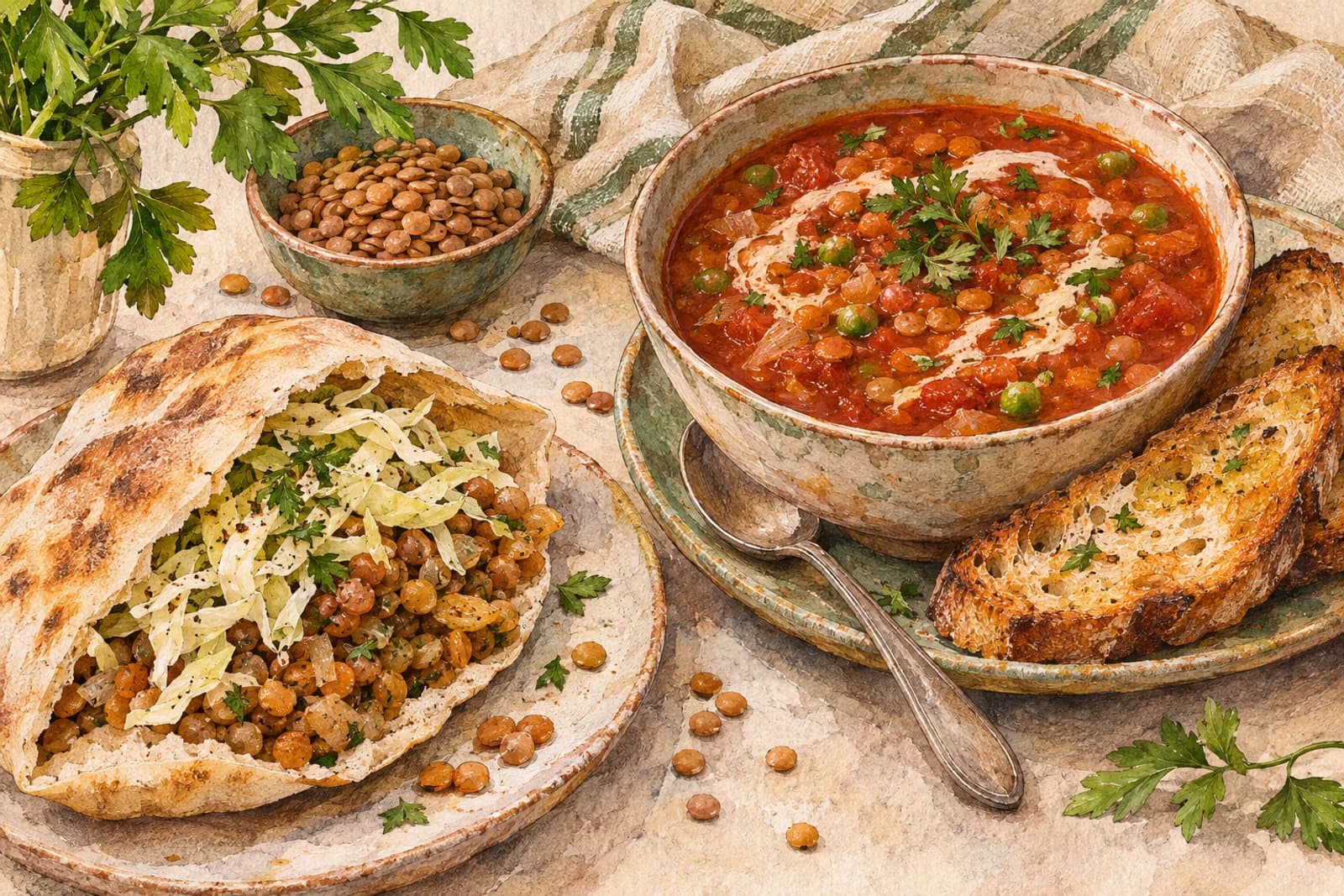
Makes six portions of cumin lentils, two of them served tonight with carrots and lemon. Set out 1½ cups dry brown or green lentils, six medium carrots, one medium onion, 3 tablespoons olive oil, 1 teaspoon ground cumin, one lemon, and salt and black pepper. Use 2 tablespoons of the oil for the carrots and the remaining tablespoon for the onion. Keep the lemon out of the pot: a wedge gives each Sunday plate a bright finish, while the remaining lemon can supply the squeeze for Tuesday’s cabbage. You’ll need a saucepan, a baking sheet, and either a small skillet or a bowl to hold the drained lentils while you reuse the saucepan.
Start with the lentils’ package directions for water and cooking. Check the dry lentils for stray debris and rinse them in a fine-mesh strainer. Bring them to a simmer as directed, then use the package time as a cue to start checking, not as a promise that they’re done. Bite into a few: the centers should be tender, not chalky, and most of the skins should still hold. If the centers are firm, keep simmering and check again. Drain any remaining cooking water well. The lentils should be moist but not sitting in liquid, which would make Tuesday’s pita harder to fill.
While the lentils cook, heat the oven to 425°F. Scrub the carrots, trim the ends, and peel them if you prefer. Cut them into pieces about 2 inches long, then split the thick pieces lengthwise until they’re roughly the same thickness as the slender ones. Leave narrow tips whole so they don’t dry out before the thicker pieces soften. Toss with 2 tablespoons olive oil and a pinch of salt. Spread the carrots in a single layer, putting a flat cut side against the pan where possible. The cut surface gives you a broad patch to brown instead of a few dark ridges.
Start checking the carrots after about 20 minutes. Turn them when the undersides are well browned, then roast until a fork slides into the thickest pieces without much resistance. If the tips are already tender when you turn the rest, lift them off and let the larger pieces finish. A second baking sheet or a shallow metal roasting pan can give the carrots more room if the first sheet is crowded. With a small toaster oven and one tray, roast in two rounds rather than piling all six carrots into the pan. The pieces can share a platter even if they don’t all finish together.
Dice the onion small enough that a spoonful of lentils won’t contain one big piece of onion. Warm the remaining tablespoon of oil in the skillet over medium heat. Cook the onion with a small pinch of salt, stirring occasionally, until soft and translucent. If the edges darken while the center of each piece is still firm, lower the heat and keep stirring. When the onion is soft, stir in the cumin just until fragrant, then take the skillet off the heat. If you’re using one saucepan instead, drain the lentils into a strainer set over a bowl, then cook the onion and cumin in the emptied pan and return the lentils to it.
Fold the onion and its oil through the drained lentils with a broad spoon so you don’t mash them against the pan. Taste a spoonful before reaching for the lemon. If the onion tastes sweet but the lentils themselves seem flat, add a pinch of salt, stir, and taste again. If the cumin is already easy to pick out, leave it there; it should still work with the yogurt on Tuesday and the tomatoes on Friday. Add black pepper to the pot if both diners like it, or save it for the plates. If the lentils are stiff enough to break as you stir, add water a tablespoon at a time until they fold easily.
Divide the lentils by volume rather than aiming for a fixed number of cups. Use one scoop to deal them out in rounds among two dinner plates and four storage portions, then split the last partial scoop as evenly as you can. If you’re freezing the Friday pair together, give its container two shares in each round. Set up the containers before you start scooping. As soon as the portions are divided, cover the two Tuesday shares in clean, shallow containers and refrigerate them; cover the two Friday shares in shallow, freezer-suitable containers and freeze them promptly. CDC and federal leftovers guidance support dividing warm food into shallow containers for prompt storage rather than leaving it out to cool in the pot.
Serve the two dinner portions with the browned carrots piled alongside, where they keep their roasted surfaces instead of softening in the lentils. Start with a squeeze of lemon over the carrots and taste a bite with both components before adding more. If one plate needs extra salt or pepper, season that plate rather than revisiting the stored portions. Cut only the wedges you need and cover and refrigerate the remaining lemon for Tuesday. If the six carrots make more than the two diners want, put the extras away promptly in their own covered, shallow container rather than adding them to the lentils set aside for the pitas or soup.
Sources for this section: Preventing Food Poisoning; Thanksgiving Leftovers for Safe Keeping, Weekend Grazing.
14. Tuesday recipe: lentil pitas with lemon-yogurt cabbage
Makes two lunches. Gather the two Sunday lentil portions reserved in the refrigerator, two pitas, about 2 cups freshly shredded cabbage, 2 tablespoons plain yogurt, a squeeze of lemon, and a pinch of ground cumin. Have salt and black pepper nearby if you want them. Use the Sunday lentils cold only if you know they were cooled and refrigerated promptly and kept at 40°F or below. Tuesday falls within the federal three-to-four-day refrigerator guidance for properly handled leftovers. If the cooling or refrigeration history can’t be established, leave the lentils out of lunch rather than tasting them to decide, in line with University of Minnesota Extension guidance.
Rinse the cabbage under running water before cutting it for the slaw. Set the piece flat-side down on a clean cutting board, trim out any hard core, and slice across the leaves into ribbons. For an easy-to-eat pocket, turn the pile and cut the longer ribbons once or twice more. You want shreds that still crunch but won’t pull half the filling out when you bite into one. A sharp knife does the job; a slicing disk is an option if it’s already out, but there’s no need to assemble a food processor for two cups. Measure the shreds loosely rather than packing them down. A densely packed cup will give you more cabbage than the dressing can readily coat.
Stir the yogurt, lemon and cumin together in a mixing bowl before adding the cabbage. Start with a small squeeze of lemon, especially if the yogurt is loose. You want a dressing that clings to the cut edges, not one that puddles under them. Add the cabbage and turn it with a fork or tongs until the shreds are lightly coated. Taste a shred with a few lentils before adjusting the seasoning. If the combination needs more brightness, add another small squeeze. If the cabbage is already tangy but the bite tastes flat, try a pinch of salt instead. The cumin in the lentils counts toward the seasoning, so the slaw doesn’t need much.
Open each pita along one edge, or cut it into two half pockets if that gives you more control over the filling. If the bread tends to split, tuck a spoon into the opening to loosen it rather than pulling hard on both sides. Loosen the cold lentils with a fork and spoon one portion into each pita, spreading the filling rather than pushing it into a mound at the bottom. Add the cabbage just before eating if crispness matters. If the pockets are small, don’t force in all the slaw: serve the excess alongside. A pita that closes loosely around its filling is easier to eat than one packed tight enough to tear.
For lunch at home, the bread can go straight onto the plate while you toss the cabbage. For lunch packed several hours ahead, keep the pita separate if you want it to stay dry. Put the prechilled lentils in a covered container and the dressed cabbage in a small lidded cup, or use one divided lunch box. If you don’t mind the cabbage and lentils mingling, pack both in one tub and fill the pita at lunch. Either way, University of Minnesota Extension recommends keeping perishable packed lunches at 40°F or below, using an insulated bag with at least two cold sources and refrigerating on arrival when possible. Packing components separately preserves texture; it doesn’t replace cold holding.
If the pitas were eaten earlier in the week, make bowls without buying another base. Spread one lentil portion in each bowl and put the slaw off to one side so the diner can take a crisp bite or mix the two together. A slice of the bread already on hand can be toasted for scooping, but it’s optional. If you have pita halves that tore during filling, tear them into pieces to eat alongside or scatter over the bowls just before serving. For this version you can leave the cabbage in slightly longer ribbons; nobody has to bite through them inside a pocket.
For a warm filling, reheat only the lentils you’ll serve hot. Add a small splash of water if they won’t stir, then heat, stir, and check in several places with a food thermometer. Federal leftovers guidance calls for 165°F throughout. Spoon the hot lentils into the bread at service and add the cold cabbage last, so it supplies the crisp, cool contrast rather than warming in the dish. If one diner wants a hot bowl and the other is taking a cold pita, heat only the first diner’s portion and keep the packed filling chilled. Reheating is a serving choice for properly handled lentils, not a way to make up for uncertain storage.
If the two diners want different finishes, split the dressed cabbage before making any final adjustments. Someone who likes a sharper slaw can squeeze lemon over their share; someone who dislikes a wet pita can lift the shreds out with a fork and leave the dressing in the bowl. The same approach works if there’s more cabbage than expected: shred only what will fit in the lunches, and leave the remaining wedge undressed for another meal. The recipe needs enough slaw for a little crunch in each bite, not enough to stretch the pita around a second salad.
Sources for this section: Thanksgiving Leftovers for Safe Keeping, Weekend Grazing; Talking food safety with University of Minnesota; Preventing Food Poisoning; Safe Food Handling.
15. Friday recipe: tomato-lentil soup from the freezer
Makes two bowls. Take the two cumin-lentil portions frozen on Sunday, one 14- to 15-ounce can of diced tomatoes with its juice, about 1 cup water or broth to start, and a handful of frozen peas, roughly ⅓ cup. Keep extra water or broth, salt and black pepper nearby. Choose water if the lentils and tomatoes are already well seasoned or if you want the cumin and tomato to stand out. Broth can give the soup a fuller flavor, but hold off on adding salt until you’ve tasted the finished pot. Toast is optional. The soup can stand on its own if the two lentil portions make bowls as substantial as the diners want.
Choose a saucepan wide enough to hold the lentils if they’re still in a frozen slab, with room above the soup to stir and boil. Tip in the tomatoes and all their juice, then add 1 cup of water or broth. Bring the mixture to a simmer and press a few tomato pieces against the side of the pan with a spoon. Crushing some, but not all, gives the broth a little body while leaving pieces of tomato in each bowl. If you’re using water, there’s no need to simmer it longer just to compensate for not having broth. The seasoned onion and cumin are still to come.
If the lentils thawed in the refrigerator, stir them into the simmering tomatoes, breaking up any firm clumps with the back of the spoon. If they’re still frozen, federal leftovers guidance allows suitable frozen leftovers to be reheated directly. Slide the block out of its container and into the liquid. As the outside softens, turn it and gently scrape the loosened lentils into the soup. Stir them off the bottom as you work. If thickened broth starts catching on the pan while the center is still hard, add a splash of liquid and ease the heat enough to keep stirring. There’s no need to pry apart a solid block with a knife.
Read the pea package before deciding when to add them. If it provides directions for cooking the peas in a pot and you can follow those directions in the soup, add them once the lentils have loosened enough for the soup to simmer evenly. Otherwise, cook the peas separately according to the package and stir them in before the final boil. Either route lets you avoid putting the peas in at the start and simmering them for however long a dense lentil block takes to break apart. A handful is enough to put peas in most spoonfuls without turning the broth into a thick vegetable stew.
Decide how thick you want the soup once the lentils are dispersed. For a brothy bowl, add water or broth in small pours until the liquid settles around the lentils when you stop stirring. For a thicker soup, press a spoonful of lentils and tomatoes against the side of the pan and stir them back in, leaving the rest intact. That gives you some body without a blender or a long reduction. Make these adjustments before the final temperature check, particularly if you’re adding cool liquid. A soup that seems thin with the lentils still in a block may thicken as soon as they’re mixed in.
Bring the soup to a rolling boil, following federal guidance for leftover soups, and verify with a food thermometer that the reheated lentils reach at least 165°F throughout. Stir and check in several places, including the middle and any area where the lentils were slow to come apart. Don’t rest the thermometer against the pan. If you find a cooler spot or a dense clump, break it up, keep heating and check again. A boiling rim doesn’t tell you what happened inside a lump. Once the soup has reached both endpoints, take it off the heat and sample a spoonful for seasoning.
Taste for salt before trying to correct the tomatoes’ acidity. A pinch may bring the lentils back into balance with the broth. If the tomatoes still taste sharper than you want, crush a few more lentils into the liquid or stir in a small drizzle of olive oil for a rounder finish. If the soup instead tastes muted, add black pepper or a small squeeze of lemon if there’s any left. Ladle into two bowls. Toast a slice per person if you want something to dip into a thin broth or if the bowls look light for tonight’s appetites. If the soup is thick and generous, skip the side and leave the bread for another meal.
If someone already used the frozen lentils, check for an unopened can of white beans before starting the soup. If the beans are still on hand, use Friday’s can of diced tomatoes for tomato and white bean toast. Drain the beans and tip them into a skillet with the tomatoes and their juice, a little olive oil and a pinch of cumin. Simmer and mash some of the beans until the mixture holds a soft mound rather than running off the toast. If only two slices remain, give each diner one and serve the extra mixture alongside. If Wednesday’s dinner used the last can of beans, pick another meal from the inventory before opening Friday’s tomatoes. Leave the peas frozen.
Sources for this section: Thanksgiving Leftovers for Safe Keeping, Weekend Grazing; Cook to a Safe Minimum Internal Temperature.
16. Pack lunch for the place it’s going
Give each of Tuesday’s lentil pitas a travel plan before you fill it. One diner is headed to an office with a refrigerator, the other might spend the morning at a workplace with only a locker, and either could get sent out on an errand that makes lunch unpredictable. The pitas start with the same cooked lentils and lemon-yogurt cabbage. What changes is where the filling will be between the moment it leaves the home refrigerator and the moment someone eats it. That route determines whether to pack the pita at all. Whether to assemble it first is a separate question about how you want the bread and cabbage to feel at lunch.
Start with filling that is already cold. University of Minnesota Extension guidance recommends keeping perishable packed lunches at 40°F or below and using an insulated bag with at least two cold sources. Pack the chilled lentils and chilled slaw with two frozen cold packs, for example. Don’t make the cold packs do the job of chilling a portion you’ve just warmed to loosen it. The cooked lentils need cold holding, and so does the freshly cut cabbage mixed with yogurt. A squeeze of lemon makes the slaw taste brighter; it doesn’t turn it into something you can pack without refrigeration.
For the office commute, pack the prechilled filling in the insulated bag with both cold sources, then put the perishable containers in the office refrigerator on arrival if possible. The refrigerator is the next stop in the cold plan, not a place to put lunch after opening email, finding a meeting room and remembering the bag under your desk. If the bread is separate, it can stay in your tote. A piece of tape with your name on the filling container can help you locate it in a shared fridge. The useful routine is to put the food away while you still have the bag in your hand.
Check that the refrigerator you’re counting on will actually be accessible. Suppose Tuesday starts at a different office, where the break room stays locked until a supervisor comes in. That isn’t the same commute with a slightly longer walk. Your bag has to do the cold-holding work until you can put the food away. Ask about access before leaving, or choose a lunch that doesn’t depend on it. The same distinction matters if you’re going directly to a morning appointment before reporting to work. A refrigerator at the end of the trip doesn’t establish that the filling stayed cold on the way there.
For the locker commute, the insulated bag and cold sources have to carry the lunch all the way to the meal. Put the cold sources around the filling, close the bag and keep it away from heat rather than opening it repeatedly for snacks. A locker gives you a place to put the bag, not refrigeration. Two cold sources are part of the Extension guidance, not a guarantee that any bag will maintain 40°F or below through a particular shift. If you’re relying on the bag regularly, a thermometer can help you check conditions in it. A cool reading at lunch, however, doesn’t reconstruct an earlier stretch when the bag was somewhere warmer.
Think about the longest likely stretch before eating, not just the commute. Imagine the locker diner expects lunch at noon but sometimes doesn’t get a break until midafternoon. If the only plan is that the filling will probably still feel cool, choose a different meal. If a lunch comes back untouched after a day of uncertain cold holding, don’t put it back in the refrigerator and assume it can go out again tomorrow. University of Minnesota Extension cautions that smell, appearance and taste can’t tell you whether leftovers are safe. A returned container needs a known handling history, not just a lid that never came off.
On the day with no dependable cold storage, pack a lunch designed for that trip. An apple, crackers and an unopened single-serving package of beans labeled for room-temperature storage can do the job without borrowing the yogurt or cooked lentils from the refrigerator. Read the package instructions and choose something you’ll open at lunch and finish, rather than carrying an opened portion around afterward. Back at home, give the unneeded pita filling another destination while it’s still within its storage window. If you know about the change before making the slaw, shred and dress only enough cabbage for the diner who’s still taking a pita.
Once the cold plan is settled, decide how much assembly you want to do at lunch. Someone with a desk and a clean spoon can keep the bread dry and add the slaw at the last minute. Someone with a short break and nowhere to set out containers may prefer to fill the pita before leaving and accept softer bread. A third option is to pack the chilled lentils and slaw together and eat them as a bowl, with the pita alongside. All three versions call for the same cold holding. If one diner takes an assembled pita to the office and the other takes the shelf-stable lunch to the locker, both meals are ready to grab, but only one needs the insulated bag.
Sources for this section: Talking food safety with University of Minnesota; Preventing Food Poisoning.
17. Know which schedule changes cost a meal
When dinner falls through, start with the last thing you know about the food, not the next slot on the calendar. Was the container still in a working refrigerator or freezer? Was it out on the counter, and can someone say for how long? Or did the appliance lose power? Those answers send you down different branches. A canceled dinner can leave a portion available for another day. A container left out too long is no longer a meal to move. A power outage calls for its own checks because the food may have stayed cold for part or all of the interruption, even though the appliance wasn’t running.
If dinner is canceled and the food is still safely stored, change the reservation first. Say both Friday diners are called in to work and the lentils are still frozen. Leave them there and assign them to a dinner next week. If the canceled meal was a leftover that has been refrigerated since cooking and never frozen, check the cook date. Federal guidance gives properly handled leftovers three to four days in the refrigerator. Move the portion to a meal within that window or freeze it promptly while it’s still within the window and you know it’s been handled safely. Moving the dinner does not move the cook date.
Check the physical container before editing the plan. One diner might say, “Friday’s lentils are in the freezer,” while the other moved them to the refrigerator on Thursday. Confirm how the portion was thawed and whether it stayed at 40°F or below before assigning it to another meal. If it thawed in the refrigerator and stayed at 40°F or below, USDA advises using it within three to four days after it thawed. If the next meal is farther out, refreeze it while it’s still within that window. If it was thawed in cold water or the microwave, FDA guidance says to cook or reheat it immediately rather than holding it for a later dinner. If one serving already went to work, check its cold-holding history separately. Do not use smell, appearance, or a taste test to certify a portion whose time or temperature history is uncertain.
If a container was forgotten on the counter, establish when it came out of cold storage or when the cooked food was left out. The CDC says to refrigerate perishables within two hours, or within one hour when they’re exposed to temperatures above 90°F. If the soup came off the stove 45 minutes ago in an ordinary indoor kitchen and the rest of its handling is known, put it away promptly in clean, covered, shallow containers. If it sat out for three hours, discard it. Make tomato-white-bean toast instead. Don’t attempt to recover a meal that exceeded the limit by bringing it back to a boil.
If nobody can establish when the container was left out, ask a question that might pin the time down: Did it come out before the grocery trip or when someone returned? A cook date and a still-cool lid won’t settle that question. If you can’t establish that the food was handled within the limits, discard it and open the backup beans and tomatoes. University of Minnesota Extension cautions against using smell, appearance or a taste test to decide whether leftovers are safe. In a shared kitchen, it helps to say exactly what failed: “We didn’t know when it came out” points to a different fix than “We knew it had been out all afternoon.”
If the power goes out, keep the refrigerator and freezer doors closed and note when the outage began. If you arrive home to an outage already underway, note what you can verify rather than treating your arrival as the start time. The CDC says a refrigerator can keep food safe for up to four hours with the door closed. That is not four hours of permission to leave food on a counter. After four hours without power, discard refrigerated perishables unless another cold source, such as a cooler with ice, has kept them at 40°F or below. Plan on tomato-white-bean toast once you have a working stove. If you can’t cook yet, use unopened shelf-stable food that the package says is ready to eat.
Evaluate the freezer separately when you can check its contents. The CDC says thawing food can be refrozen or cooked if it still has ice crystals or is at 40°F or below. Check the food you’re deciding about rather than assuming a bag of peas tells you what happened to every container. If the cooked lentils are fully thawed and above 40°F, treat them as perishable leftovers: FDA guidance says to discard them if they’ve been above 40°F for two hours or more. If you don’t know how long they were above 40°F, discard them and use the pantry fallback. Note what you discarded so the other diner doesn’t plan Friday soup around a portion that is no longer there.
Assign the next action to one person. For a calendar change, that means the person who moves the meal confirms that the container is still where the plan says it is. For a counter mistake, the person who finds it checks with the last cook and then either puts the food away promptly or discards it and takes the backup cans off the shelf. For an outage, one person records the start time and handles the food checks so both diners aren’t opening the doors. If the backup gets used, cross it off the inventory that night. An empty space beside the beans is easy to miss when the next dinner gets canceled.
Sources for this section: Preventing Food Poisoning; Thanksgiving Leftovers for Safe Keeping, Weekend Grazing; Talking food safety with University of Minnesota; Keep Food Safe After a Disaster or Emergency; Power Outages: Key Tips for Consumers About Food Safety; Safe Food Handling; How do you thaw leftovers safely?.
18. Let the waste log write next week’s shopping list
Keep a one-week log beside the shared meal plan. Give each entry four pieces of information: the food, the approximate amount, what happened to it and why. “Cabbage” doesn’t tell the shopper much. “Half a head, enough for about two side servings, discarded because it was forgotten” suggests something to change. Use the units you used to plan the meals: one lunch portion, half a head, two slices or one soup container. The point isn’t to weigh dinner scraps. It’s to be able to look at the next shopping list and tell which quantity or reservation deserves a second look.
Separate food that was discarded from food that simply didn’t get eaten in its assigned slot. A frozen portion carried into next week is still available; counting it as waste would hide a dinner you don’t need to replace. For the reason, start with overbought, overcooked, forgotten, disliked or lost to a safety failure. Add “plans changed” for a usable portion that needs a new date. Record what you know rather than forcing every entry into a category. If there was no meal for the cabbage in the first place, overbought might fit. If it had a job and nobody saw it in the drawer, forgotten is more useful.
Here’s a hypothetical Friday entry: “Cumin lentils, one serving; still frozen, unused this week; second diner worked late.” One person ate their share and the other share never left the freezer. Move that single serving to Monday dinner for the person who will be home. If there’s a can of tomatoes and some peas already in stock, they can turn it into soup. They don’t need to buy another bag of lentils for Monday. This entry doesn’t mean the Sunday batch was too large. In this case, making two frozen singles let one person eat on Friday and left a usable dinner for another day.
The cabbage entry tells you to do something different: “Extra cabbage from the half head, about two side servings; discarded; forgotten in the drawer.” The household used what it needed for Tuesday’s pitas but missed the cabbage side it had planned for Monday’s soup. Next week, check whether the store sells a half head and buy only what covers the planned meals. If you buy a whole head and want the extra as a skillet side with onion, put it on Sunday’s plan and set it beside the other dinner ingredients when you start cooking. Leave the wedge for Tuesday undressed. If nobody wants the side, don’t buy a full head on the assumption that someone will think of something.
The third entry reads, “Soup, one serving; discarded; nobody knew how long the container had been out.” Don’t solve that by buying less of an ingredient or by asking the next person to smell the soup. Change the cooling handoff. In this household, the person who ladles the last planned serving also puts the reserved soup into covered, shallow containers and gets it into cold storage promptly, following CDC and federal leftovers guidance. The second cook takes over only after saying so. Mark the portions stored in the shared note after they are put away, not when the empty containers are set on the counter. That gives the next person information they can use.
Look for a pattern before changing a recipe that people like. If two weeks produce uneaten portions because the second diner repeatedly works Fridays, pack separate servings or plan Friday for one. If the cabbage side comes back uneaten even when it’s served on time, mark it disliked and pick a different vegetable the household will actually use. If the soup incident repeats, make less on nights when nobody has room or time to put the extra away promptly. These are different corrections even if all three entries say “one portion.” The reason tells you whether to change the buying, the cooking, the reservation or the handling.
At the next shopping check, tally discarded portions and carryovers separately. This hypothetical week has about three portions discarded, two from cabbage and one from soup, plus one usable frozen serving carried forward. Those estimates are good enough for comparing the household with itself if it keeps using roughly the same units. Follow EPA guidance by checking the refrigerator, freezer and cupboard before buying, then write quantities for the meals you actually expect to eat. If next week has fewer meals at home, note that alongside the tally; a smaller discard count in a week with less cooking doesn’t tell you which change helped.
Revised shopping list for this household: Buy two pitas, enough plain yogurt for two tablespoons of dressing in the smallest practical container, one lemon, and enough cabbage for about 2 cups of shreds. If the smallest piece or package leaves extra, buy it only if the extra has a job, such as Sunday’s skillet side. Otherwise, use a crisp vegetable already on hand in the pitas. Use the single frozen lentil serving for Monday, and check whether there are enough dry lentils to cook two more portions for Tuesday’s pitas before buying another bag. No tomatoes or peas for Monday if the inventory confirms there’s enough for one bowl. Buy one can of white beans and one can of diced tomatoes only if the reserve pair was opened. Check the freezer for four slices of bread for the toast before adding a loaf.
Sources for this section: Preventing Wasted Food At Home; Preventing Food Poisoning; Talking food safety with University of Minnesota; Thanksgiving Leftovers for Safe Keeping, Weekend Grazing.