A working kitchen for the week
About Pantry Prep Notes
About Pantry Prep Notes
Pantry Prep Notes is a new, independent publication from SiteLift Media about cooking several portions at once and deciding what to do with them. We focus on recipes with specific quantities, a clear cooking order and a plan for the portions you save. A pot of tomato and white bean stew, for example, might be served with toast tonight and spooned over a baked potato at another meal.
The site is for people who want to do some of the week's cooking in one session without eating the same dinner every night. You might cook for one and want a recipe that makes four useful portions. You might share a kitchen and need to know whether a tray of roasted vegetables will fill two lunch containers after everyone has eaten dinner.
Our scope includes batch recipes, weekly portion planning and meals that start with ingredients you already have. The useful questions are often small: Does a cup of rice mean a cup before or after cooking? Should all the chickpeas go into the tomato sauce, or should some stay plain for lunch? We aim to answer those questions where they affect what you buy, cook or set aside.
Planning a batch before you shop
Start with the yield and compare it with the meals you actually want to make. Six portions could mean dinner for two and four individual lunches, or three dinners for two. Those are different plans even if the ingredient list is the same. If two portions of a lentil bake are for lunches with a side salad, you may want smaller pieces than you would cut for dinner.
Read the whole method before you get out a pan. If a meal calls for roasted cauliflower and toasted almonds, check whether both steps use the oven at the same setting or whether the almonds are meant to go in a skillet. The order matters when you have one sheet pan or need the skillet for the onions before you can finish the sauce.
Check the quantities at the points where ingredients get divided. A recipe may call for two lemons but use the zest in the chickpeas, half the juice in the dressing and the rest at serving. The same applies to equipment and containers. A double batch of peppers might need a second tray even if the finished peppers fit into the same dish as the original batch.
Giving each portion a destination
Decide which parts of a batch belong together before you portion it out. If barley, roasted carrots and a lemon dressing are dinner tonight, you might combine only those servings and divide the remaining barley and carrots separately. The barley can go into soup later, while the carrots can be served with beans. Dressing the whole batch at once would make both of those changes harder.
An early lunch and a later freezer meal may need different containers and different finishing steps. For a lunch of tomato beans and rice, you might want a container that holds a serving of both and a small separate cup for pickled onions. For a freezer portion, you might set aside just the tomato beans and decide later whether to serve them with rice or toast.
It also helps to note what still needs doing. If you reserve two portions of roasted squash for quesadillas, the squash is ready but you still need tortillas and cheese. If you save some cooked lentils for a salad, the cucumber and herbs can wait until you assemble it. A portion plan should distinguish the work you finished from the ingredients and steps the next meal still requires.
Cooking with what you already have
A recipe that starts with the pantry should tell you which substitutions change the dish and which mostly change the seasoning. White beans and chickpeas can both go into a tomato skillet, but some white beans mash readily into the sauce while chickpeas tend to hold their shape. If the method relies on mashed beans to thicken the sauce, the recipe needs to make that clear.
Look at the form of an ingredient as well as its name. Cooked farro and dry farro are not interchangeable measures, and crushed tomatoes do not behave exactly like drained diced tomatoes. If you have cooked farro for a dish that calls for simmering dry grain, look for directions that explain when the cooked grain goes in and whether the amount of liquid changes.
Seasonings call for a different sort of judgment. Ground cumin can give onions and beans an earthy flavor without adding heat, while a chili blend may contain salt as well as hot pepper. If a recipe offers both, it should explain when to taste before adding more salt. That detail is more useful than a list of substitutes that says nothing about how to use them.
Finding your way around the site
Start with Plan your prep on pantryprepnotes.com if you know what you want to get done but have not picked a recipe. If you have one oven and want to make two dishes, begin with how to build a batch. If you already have a pot of cooked chickpeas and need to decide how many to use tonight, begin with planning the week or cooking from the pantry.
Kitchen Notes is the publication archive. Use it to look back through published recipes and guides when you want to revisit a method or consider another use for an ingredient. If you're deciding whether to put roasted cabbage in a grain bowl or serve it alongside beans, compare not just the ingredient lists but also the yields, the pans involved and what gets added at serving.
On a recipe page, check the yield, then read the ingredient list and method together. If you want four bowls of rice and vegetables but the recipe measures its yield in cups, work out how much belongs in each bowl before you shop. Then look for any garnish or sauce the recipe keeps separate so you can account for it when you set out your containers.
The harvest mouse in the kitchen
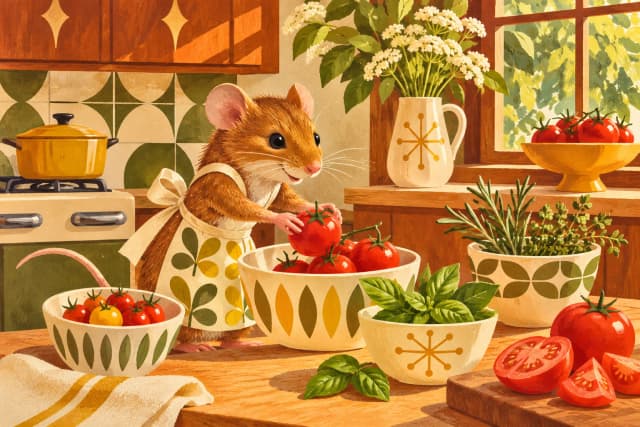
The Pantry Prep Notes mascot is a harvest mouse sorting tomatoes in a kitchen. Sorting is a familiar bit of prep that happens before any burner goes on. Small tomatoes might stay whole for one dish, larger ones might be chopped for a sauce, and a few might be left uncut for tomorrow's sandwiches. The mouse is shown doing that ordinary work rather than presenting a finished meal.
The illustration also reflects the scale of the decisions we cover. You don't need to plan every dinner of the week to decide that half a bowl of tomatoes should stay out of tonight's sauce. You might only need to count what you have, check the recipe quantity and set aside enough for the second dish. That's a useful plan even when it involves just two meals.
Tomatoes suit the illustration because the same ingredient can take on different roles depending on how you prepare it. Chopped tomatoes can cook down with onions for beans, while sliced tomatoes can be served with toast. Once they all go into the pan, that choice is gone. The mouse sorting them represents taking a moment to decide what belongs in the batch and what should stay separate.
How the publication is made
SiteLift Media publishes Pantry Prep Notes with AI assistance in research, drafting and illustration. The publication includes original longer guides as well as recipes. Where a recipe can state how much cooked grain to reserve, a guide can spend more time explaining how to divide that grain among meals with different additions, such as a bowl with roasted mushrooms and a soup with beans.
A longer guide can also show why the order of two ordinary tasks matters. If onions and peppers both need the same skillet, it helps to say whether the onions should come out before the peppers go in or whether the two finish together. Those details matter more when you're making several portions and can't fit everything in the pan at once.
We want the writing to make quantities and decisions easy to find. If chickpeas are listed for both a stew and a topping, the text should tell you how many to put aside before the rest go into the pot. If lemon juice is optional but tahini gives a dressing its thickness, the recipe should not present the two ingredients as equally easy to leave out.
Disclosures, feeds and corrections
Pantry Prep Notes carries affiliate disclosures. A link to meal prep containers, for example, may earn SiteLift Media a commission if you buy through it. The recipe itself should give you enough information to judge what you need. If you're dividing cooked barley into three lunch portions, the number of portions and the room needed for toppings are useful whether you shop through a link or use containers you own.
The site offers public RSS and Atom feeds. Add either feed to a compatible reader if you prefer to keep up with new posts there rather than visit the homepage. If a new guide on using cooked beans catches your attention but you aren't planning meals until later, you can return to the site and find it in Kitchen Notes.
Use Contact to report a correction. Include the page title and the quantity, step or caption that needs another look. For example, if a recipe lists two cups of cooked lentils but its method calls for three, point to both places. If the yield says four portions and the portion plan accounts for only three, tell us which part of the plan appears to be missing.
Read our editorial standards or send a question or correction.